If you’ve ever met Mickey Mouse at a Disney park and wondered, “Are Disney characters allowed to talk?” you’re not alone. It was one of my first questions during my first visit to Disneyland as an adult, especially after watching a kid run up to Goofy only to get a silent wave in return.
At first, I assumed it was just a quirky character choice, but after a few more visits and doing some digging, I realized there’s a lot more to it. From consistency across parks to guest experience and performer safety, Disney has very intentional reasons for keeping most of their costumed characters silent.
Over the years, I’ve become more curious about how Disney handles character interactions – both as a lifelong fan and as someone who loves understanding the behind-the-scenes decisions that shape guest experiences. Whether you’re planning your first trip or are just curious about the logistics, here’s what I’ve learned about why most Disney characters don’t speak, and why that silence is more strategic than it might seem at first.
If you’re planning to meet your favorite characters, it’s a good idea to read up on Disney World’s hug policy so you know what to expect during those special moments.
Key Points
- Most Disney costumed characters are not allowed to speak to maintain consistency, protect performers, and preserve the guest experience.
- Speaking roles are reserved for select “face characters” like Disney princesses who look and sound like their film counterparts.
- Character auditions are specific and highly competitive, especially for roles that require dialogue and improvisation. See open roles at Disney auditions.
Are Disney Characters Allowed to Talk in the Parks?
The short answer: no, most aren’t.
Characters in full costumes – like Donald Duck, Stitch, or Mickey Mouse – are considered fur characters, and they do not speak during meet-and-greets or shows. Instead, they rely on exaggerated gestures, body language, and hugs to communicate.
There are practical reasons behind this policy, along with some strategic ones that might not be obvious at first glance.
Fur Characters vs. Face Characters
Disney makes a clear distinction between “fur characters” and “face characters.”
- Fur characters include anyone in a full-body costume with a headpiece. These are the classic characters like Goofy, Pluto, Buzz Lightyear, and Winnie the Pooh. Performers inside these suits do not talk at all, regardless of how familiar the character’s voice may be from the movies.
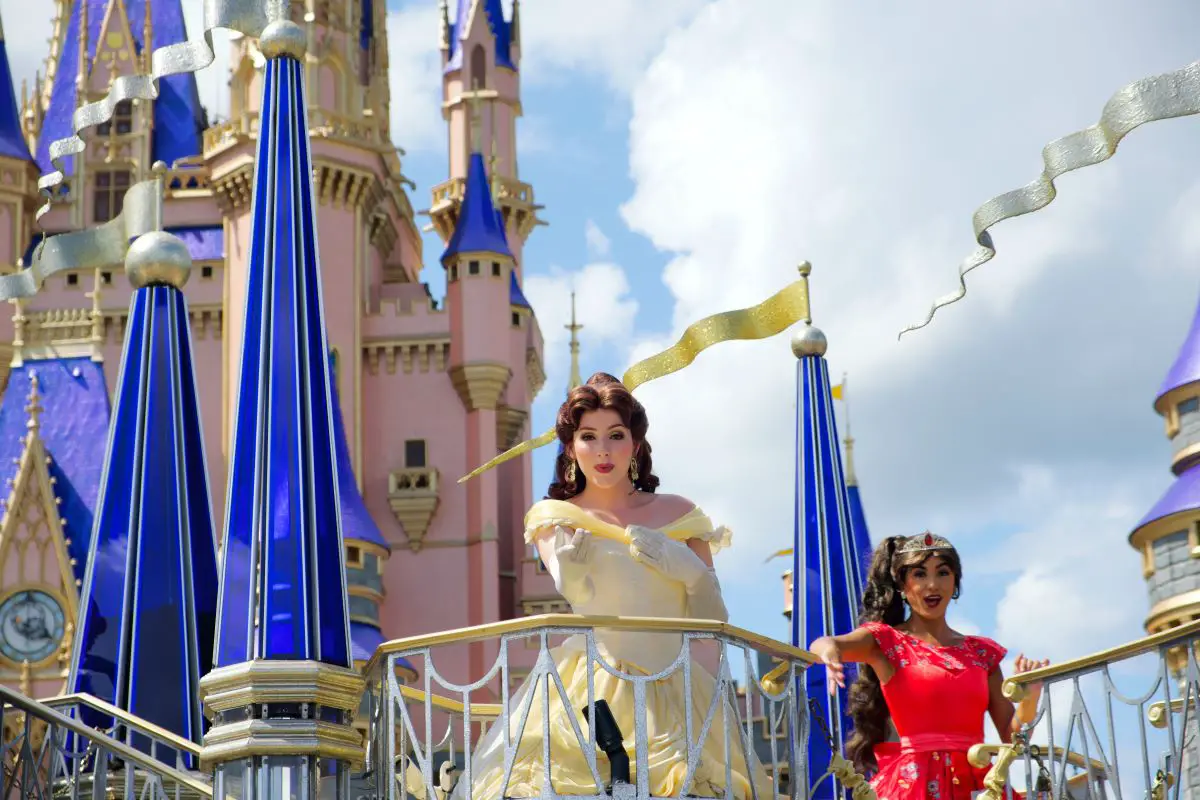
- Face characters, on the other hand, are live performers whose faces are visible and who are allowed to speak directly with guests. These include characters like Elsa, Cinderella, and Jack Sparrow.
Becoming a face character isn’t easy. It requires not only the right physical look, but also excellent improvisation skills, comfort with staying in character for long periods, and the ability to engage both kids and adults naturally.
If you’re curious about what goes into becoming one of the Disney Princesses, the preparation is surprisingly intense.
Why Most Disney Characters Stay Silent
This silence isn’t just about tradition. It serves several important purposes that help Disney deliver a reliable, high-quality experience across all their parks.
Consistency Across Parks
Disney operates theme parks in multiple countries. That means you might meet Mickey Mouse in California, Tokyo, or Paris. If he were to speak, the voice would need to match exactly in all locations and all languages – something that’s incredibly difficult to pull off.
By keeping fur characters silent, Disney avoids any inconsistencies in voice or accent that could break the illusion for guests. Instead, they rely on movement, gestures, and body language to communicate universally.
Performer Protection
These costumes are heavy, hot, and difficult to move in. Asking a performer to also match a character’s iconic voice while inside one of these suits would be unrealistic and potentially unsafe.
The silence also allows for a broader range of performers to take on the roles. Since guests never see the performer or hear their voice, the main requirement becomes matching the right height and being able to move convincingly. (You can read more about Disney character height requirements if you’re curious about how specific those guidelines get.)
Guest Experience
Guests come to the parks expecting the characters to look, move, and sound like they do in the films. Any small mismatch – like a different tone of voice, awkward timing, or unconvincing accent – could make the interaction feel off.
By removing voice altogether for fur characters, Disney controls that variable. This lets guests enjoy the interaction through body language and visual cues, which tend to be more consistent and harder to mess up.
When Characters Do Speak
Not all characters are silent. You’ve probably noticed that certain meet-and-greet characters do talk – especially the princesses and characters from live-action films.
Princesses and Other Face Roles
Disney princesses and characters like Gaston or the Mad Hatter are allowed to speak freely during guest interactions. These performers are trained actors who go through a strict audition process that includes improvisation, vocal delivery, and interaction with people of all ages.
They need to be quick on their feet, responsive to questions, and able to stay in character for extended periods. This makes the experience feel incredibly immersive, especially for young kids.
If you’re wondering about the job perks and compensation, there’s a great breakdown here on how much Disney princesses make. Spoiler: it’s not minimum wage.
Retired Talking Mickey Experiment
A few years ago, Disney introduced a Talking Mickey Mouse experience at select locations. This version of Mickey could blink, move his mouth, and deliver pre-recorded voice lines in response to guest interactions.
While it was a hit for many guests, the program was eventually retired. Maintaining timing and synchronization was a challenge, and the experience sometimes broke the illusion when Mickey didn’t respond as expected.
If you’re interested in how that decision evolved, there’s a detailed article on why don’t Disney characters talk that dives into the trial and retirement of that program.
How Characters Stay in Character Without Talking
Even without speaking, fur characters often steal the show. Their silent performances are full of charm, humor, and expression.
Nonverbal Communication
Fur character performers are extensively trained in body language. Every gesture, nod, or wave is meant to convey emotion and personality. Tigger’s bouncy energy, Donald Duck’s signature grumpiness, or Eeyore’s slow, sad shuffle all communicate clearly without a single word.
These physical cues are what make the interactions feel alive. Kids don’t seem to miss the talking – they respond to the energy and expressions more than anything else.
Signature Autographs
Even without a voice, characters can still interact through autographs. Many carry personalized signature books, and cast members are trained to write autographs in the character’s unique style.
For many families, collecting these autographs is a highlight of the trip. If you’re wondering whether it’s still a thing post-pandemic, here’s the scoop on do Disney characters still sign autographs.
Staying in Costume
The work behind the scenes to maintain these interactions is no joke. Performers rotate in and out of costume every 20 to 30 minutes to avoid overheating or fatigue.
There are protocols in place to ensure they stay in character the entire time they’re on stage – no matter the weather or crowd size. You can read more about how this works in how long Disney characters stay in costume.
Behind the Scenes: Auditioning and Pay
If you’ve ever thought about working as a Disney character, the audition process is detailed and very specific.
Disney holds open auditions regularly for both face and fur characters. Requirements vary depending on the role, but often include specific height ranges, physical coordination, improv skills, and the ability to perform in front of large crowds. You can see what roles are currently open on the official Disney auditions page.
For many performers, it’s a dream job – but it’s also hard work. There are long days, strict guidelines, and high expectations. That said, it’s worth checking out what compensation looks like for these roles, especially if you’re curious about how much Disney characters get paid.
Final Thoughts
While you might go in expecting your favorite characters to chat like they do in the movies, the silent performance style is actually a carefully chosen strategy. It helps protect performers, maintain global consistency, and ensures that no matter where you are in the world, Mickey Mouse always feels like Mickey Mouse.
Once you understand the reasoning, it becomes easier to appreciate just how much effort goes into creating those character moments – even the silent ones.
If you’re planning a trip or just curious about the range of characters available, I highly recommend checking out this guide to Disney characters. It breaks down the variety of characters you’ll encounter and how to find them around the parks.