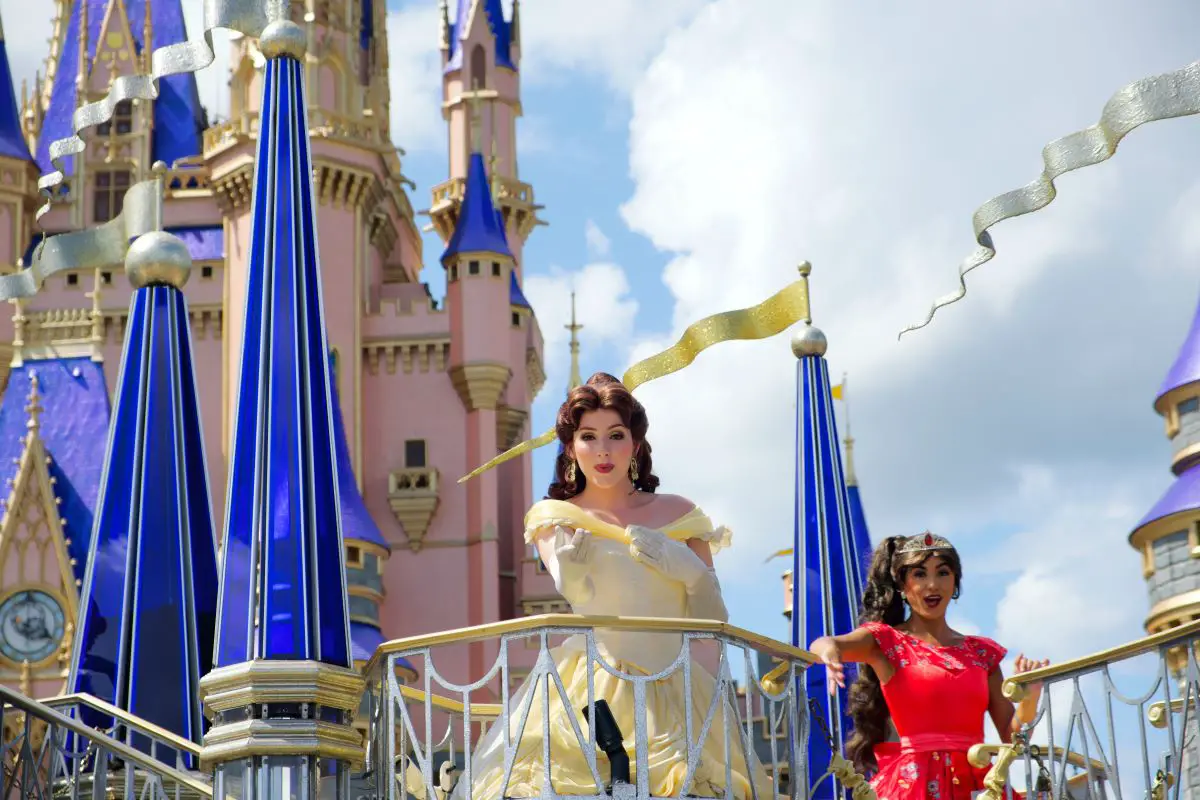
Disney character performers generally do not stay inside a full character costume continuously for hours. Former Walt Disney World performers have described typical sets of roughly 20 to 45 minutes, followed by time backstage out of costume. The exact schedule can vary by location, weather, costume and entertainment assignment.
Outdoor sets can be shorter during hot Florida weather, while indoor character locations may allow longer appearances. And although guests may see Mickey, Goofy or another character greeting people for a long stretch of the day, the performer inside can rotate without guests ever noticing.
How Long Do Disney Characters Stay in Costume at a Time?
A useful range to expect is about 20 to 45 minutes at a time for fully costumed characters, based on accounts from former Disney character performers. That is not one fixed rule for every character, park or weather condition.
A former performer I spoke with described the work as physically demanding, especially when wearing a complete character head and body costume. Other former Walt Disney World performers have described schedules where a 30-minute performance set could be followed by roughly 30 minutes backstage.
Disney’s current Character Performer information does not publish a universal set length. It does, however, make the physical demands clear. Disney says performers may work in large body costumes, heads and feet, sometimes with limited vision and range of motion, at both indoor and outdoor locations in hot and humid weather.
You can read Disney’s current description of the role on its Character Performer FAQ.
| Character Situation | Typical Reported Pattern |
|---|---|
| Fully costumed character indoors | Often around 30 to 45 minutes before a break |
| Fully costumed character outdoors | Often around 20 to 30 minutes in hotter conditions |
| Character Look-Alike | Can generally perform longer sets than a fully enclosed character |
| Very hot or humid weather | Outdoor appearance times may be shortened |
Those are typical reported ranges, not a guarantee of what you will see during a particular visit.
How Long Do Disney Characters Stay Out?
The character can appear to stay out much longer than the individual performer inside the costume.
Disney can use multiple trained performers for the same character role. One performer can finish a set backstage while another takes over, allowing the guest experience to continue with little or no obvious interruption.
That distinction is important. If Mickey is scheduled to greet guests for several hours, it does not mean one person is wearing the Mickey costume for that entire period.
Consistent sizing is part of making those rotations work. Disney casts performers within specific height ranges for different roles, which I explain in my guide to Disney character height requirements.
Are Disney Character Costumes Air Conditioned?
Traditional Disney character costumes are not generally described by former performers as having built-in air conditioning. The idea that Mickey, Goofy or Donald has a miniature air-conditioning system inside the costume is largely a myth.
Older interviews with Disney performers have specifically described the costumes as lacking built-in fans or air conditioning. Disney’s current performer information also warns applicants that fully costumed characters can involve large body costumes, heads and feet while working in hot and humid weather.
That makes regular time out of costume particularly important. The solution is less about keeping the inside of the costume cool continuously and more about limiting how long a performer remains inside it before recovering backstage.
How Do Disney Characters Stay Cool?
The most important tool is rotation. Performers work a set, leave the guest area and get time outside the full costume before returning for another appearance.
Weather can affect that schedule. Former performers have described shorter outdoor sets when Florida temperatures become especially uncomfortable, while indoor, climate-controlled character locations can support longer appearances.
Hydration is another obvious part of the job. Disney even emphasizes staying hydrated in its general audition guidance, and performers have backstage time between sets to recover before putting the costume back on.
This is one reason character appearances can pause temporarily even when a long line of guests is waiting. The break is part of safely sustaining the performance throughout the day.
Sculpted Characters vs. Character Look-Alikes
Disney uses the term sculpted character for performers wearing full character costumes. Guests and fans often call these “fur characters.” Mickey Mouse, Donald Duck, Goofy and Pluto are familiar examples.
Disney also hires Character Look-Alikes, such as performers portraying certain princesses and other human characters. These roles are sometimes casually called “face characters.”
The physical demands are different. A Character Look-Alike does not have a large sculpted head covering the performer’s face, so heat management and visibility are different from a fully enclosed character costume.
Disney’s current casting information also notes an interesting detail: performers selected as Character Look-Alikes may still perform in fully costumed sculpted-character roles. So the two types of work are not necessarily completely separate.
What Is It Like Inside a Disney Character Costume?
The performers I have spoken with described the experience as much more physical than simply standing around for photos. A performer may repeatedly wave, hug guests, pose, sign autographs and use exaggerated body language while wearing a costume that restricts normal movement.
Disney’s own job description warns that some costumes have limited vision and range of motion. That helps explain why character attendants and other cast members remain nearby during many appearances.
Communication is another challenge. Many sculpted characters do not speak during traditional meet-and-greets, meaning the performer has to communicate through gestures, posture and movement. I go deeper into that in my guide explaining why many Disney characters don’t talk.
Do Disney Character Performers Wear the Same Costume All Day?
No. A character performer’s workday and the amount of time actually spent inside a costume are two different things.
A performer may complete multiple sets over the course of a shift, with backstage time between them. Depending on casting needs, a performer can also be trained to portray more than one character whose costume fits that performer’s height range.
This is also why asking how many hours a Disney character works does not give you the same answer as asking how long someone stays inside the costume. The shift may last for hours, but individual periods in full costume are much shorter.
Why Characters Sometimes Leave While Guests Are Waiting
If a character suddenly leaves a meet-and-greet, it does not necessarily mean the appearance is over. The performer may simply be reaching the end of a scheduled set.
Sometimes another performer can take over and the character returns shortly afterward. Outdoor appearances can also be affected by heat, rain and other operational conditions.
If meeting a particular character matters to you, check the official Disney app or park schedule rather than assuming a character will remain continuously available throughout the day. My broader Disney characters guide also explains more about character appearances around the parks.
How Physically Demanding Is the Job?
Disney makes the physical requirements clear before performers are hired. Current Walt Disney World character information specifically mentions large body costumes, character heads and feet, limited vision, limited range of motion and exposure to hot and humid weather.
Applicants also go through an audition process focused heavily on movement and character performance. Disney describes its auditions as involving movement combinations and encourages performers to use big, expressive gestures.
You can see current opportunities on the official Disney Auditions site. If you’re curious about the job beyond the costume itself, I also track current information in my guide to how much Disney character performers get paid.
So How Long Is Someone Actually Inside the Costume?
For a fully costumed Disney character, roughly 20 to 45 minutes at a time is a reasonable reported range, with shorter sets possible outdoors in hotter conditions. That should not be treated as a universal Disney rule because schedules vary by role, location and conditions.
The important distinction is that the character may be visible to guests for much longer than any one performer remains inside the costume. Disney can rotate trained performers throughout the day, giving each person time backstage before the next set.
Considering the heat, restricted movement and energy required to stay animated for every guest, those relatively short sets make much more sense once you understand what the job actually involves.