I’ve stood in front of these castles enough times to know two things can be true at once: they feel iconic in the moment, and most of us don’t actually know what we’re looking at. So this post is a cleaner, more “by-the-numbers” list of Disney castle facts, built around details you can verify, measure, or point to while you’re standing there with a coffee and a camera.
I’m still writing this in a real-visitor voice (because crowds, lighting, and timing matter), but the list itself leans hard into dates, dimensions, design choices, and park-specific details. If you want the broader context of how each castle fits into the timeline of the parks, I’ve also got a deeper background guide to Disney castles history.
If you’re comparing parks, start here: Disney castles around the world. It’ll help you quickly see which castle belongs to which resort before you go down the rabbit hole.
Key points
- If you’re trying to photograph a castle clearly, the biggest “upgrade” is timing: early morning and late evening consistently give you cleaner sightlines and better light.
- When comparing castles, always check how the height is measured (some measurements start at water level or the bottom of a moat). That’s why I keep a separate Disney castles height comparison reference.
- If you want details without shoulder-to-shoulder stress, circle the hub and look at the castle base first. The lower-level storytelling is usually easier to see than the spires.
Disney castle facts you can verify in the parks
Before I get into the park-by-park lists, here are a few “big picture” facts that make the details below easier to understand. These are the things I wish someone had told me before my first castle-focused day.
- There are six Disney theme parks with a “castle park icon” centerpiece: Disneyland (California), Magic Kingdom (Florida), Tokyo Disneyland, Disneyland Paris, Shanghai Disneyland, and Hong Kong Disneyland.
- Disney castle heights are often quoted using different starting points (for example: water level vs the bottom of a moat), which is why two reputable sources can give two different-looking numbers for the same building.
- Forced perspective is a standard castle design tool: upper stones, windows, and decorative elements are intentionally built smaller so the structure reads taller from the main approach.
- The most “composed” castle views usually come from sightlines the park was built around (main street or the hub), not from random angles inside the land.
- The castles are functioning traffic infrastructure, not just set pieces. Each one shapes crowd flow between lands, which is why the area can feel like a moving river at peak times.
- Castle lighting and projection mapping can make the same structure look like a completely different building at night, which is why I treat daytime photos and nighttime photos as separate goals.
- When a castle has a walk-through, it usually closes temporarily for fireworks or nighttime operations, so it’s smart to do walk-throughs earlier in the day.
- “Castle facts” are often local. You can’t assume what’s true in one resort is true in another (even when the castles look similar), which is part of why I keep a separate page on Sleeping Beauty vs Cinderella castle.
- Many “castle secrets” people talk about are actually visible design choices at ground level, not hidden rooms. If you like that kind of detail hunting, start with Disney castle secrets.
- Real-world architecture is baked into the silhouettes. If you learn the inspirations, you’ll start spotting the references fast, which is why I recommend castles that inspired Disney castles as a companion read.
Cinderella Castle in Walt Disney World (Florida)

This is the one most people mean when they say “the Disney castle.” It’s also the castle where the numbers are the most talked about, because everything about it was engineered for Florida weather and Florida-scale crowds.
- Cinderella Castle was completed in July 1971 after about 18 months of construction.
- It is commonly described as 189 feet tall when measured from the bottom of the moat (and about 183 feet from water level).
- The castle height was designed to stay under the common 200-foot threshold where aircraft warning lights are typically recommended.
- The moat around Cinderella Castle holds about 3.37 million gallons of water.
- Cinderella Castle has a drawbridge over the moat, but it does not raise.
- The castle has 27 towers/turrets, and the numbering runs 1 through 29 because two numbers were skipped during design.
- Tower numbers 13 and 17 were removed from the plan because they would have been visually blocked by nearby Fantasyland buildings.
- The front clock is on tower 10.
- The tallest tower is number 20.
- One of the other gold-roofed towers is number 23.
- The outside is not brick. The structure is primarily steel and concrete with a hard exterior finish that’s designed to read like stone from the guest viewing angles.
- Cinderella Castle uses forced perspective: windows and stonework become progressively smaller as the castle rises.
- Inside the main breezeway are five large Cinderella story mosaic panels, and each panel is roughly 15 feet high by 10 feet wide.
- The mosaics use hundreds of colors and include materials like gold and silver in the glasswork so the surface catches light as you walk past.
- The Cinderella Castle Suite exists, but it is not a normal hotel booking. If you’ve ever wondered how it works, I broke down the reality here: how much it is to stay in Cinderella’s Castle.
If you’re planning your day around the castle in Florida, I still recommend checking park hours and updates through the official Walt Disney World site before you go.
Sleeping Beauty Castle at Disneyland (California)

This castle feels intimate in person because it’s smaller and closer to you. It’s the one that rewards detail shots, especially when the hub isn’t jammed up.
- Sleeping Beauty Castle opened on July 17, 1955, the same day Disneyland opened.
- The castle is about 77 feet tall.
- Guests could not walk through the interior until 1957.
- Disneyland’s castle is famously designed to appear taller than it really is using forced perspective.
- The drawbridge has only been lowered twice: once for opening day in 1955 and once for the rededication of Fantasyland in 1983.
- A primary real-world inspiration often cited for Sleeping Beauty Castle is Neuschwanstein Castle in Bavaria.
- The walk-through experience is a series of diorama-style scenes that tell the story of Sleeping Beauty.
- Because the castle is smaller, a wide-angle phone lens tends to distort it more easily; stepping back and shooting level usually gives a more accurate-looking silhouette.
- If your goal is “best photo angles without fighting the crowd,” it’s worth starting with the Florida-specific guide and then adapting the idea for California: Cinderella castle photo spots.
Cinderella Castle at Tokyo Disneyland

Tokyo’s castle surprises people because it looks extremely familiar, but the details and experiences around it aren’t a carbon copy.
- Tokyo Disneyland opened on April 15, 1983, and its Cinderella Castle opened with the park.
- The tallest structure at Tokyo Disneyland is Cinderella Castle, which stands about 51 meters (167 feet).
- Tokyo’s Cinderella Castle was designed to be near-identical in overall form to the Florida castle, but it has a different color scheme.
- From 1986 to 2006, Tokyo’s castle housed a walk-through attraction called the Cinderella Castle Mystery Tour.
- Today, guests can experience Cinderella-themed exhibits inside via Cinderella’s Fairy Tale Hall.
- Tokyo’s resort is also home to other castle-like icons, including Beast’s Castle in the Beauty and the Beast area.
- If you like comparing “icon status” across resorts, this is where my personal ranking notes come in handy: Disney castles ranked.
Disneyland Paris, Shanghai, and Hong Kong castle facts

These three are where castle design gets the most interesting, because each one is doing something you don’t get in the U.S. parks.
- Disneyland Paris opened on April 12, 1992, and its centerpiece castle is Le Château de la Belle au Bois Dormant (Sleeping Beauty Castle).
- Disneyland Paris’ castle is about 50 meters tall (around 167 feet), depending on how the height is measured.
- Disneyland Paris has a dragon beneath the castle: La Tanière du Dragon is a walk-through dungeon space featuring a large audio-animatronic dragon.
- The dragon is roughly 24 meters long (around 79 feet), making it one of the most memorable “castle you can actually explore” features in any resort.
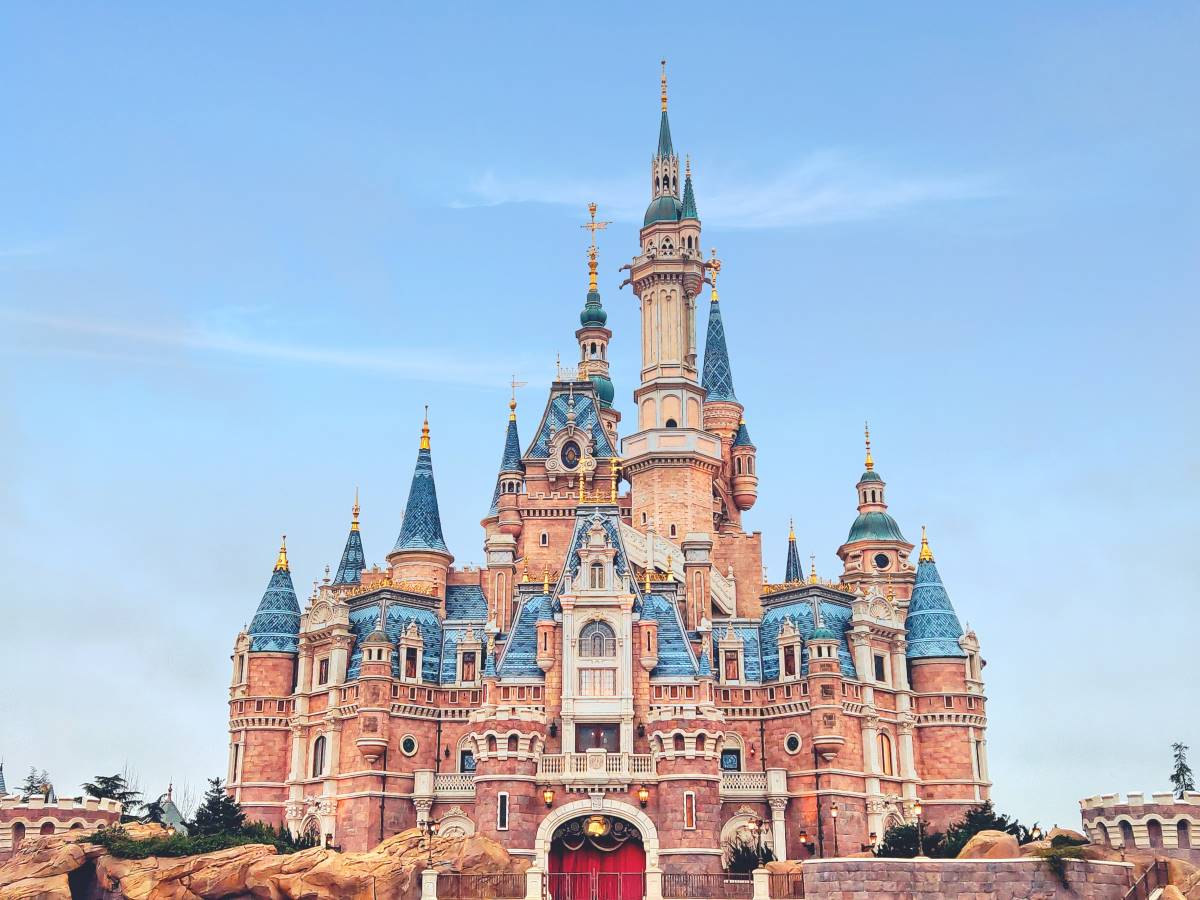
- Shanghai Disneyland opened on June 16, 2016, with the Enchanted Storybook Castle as its centerpiece.
- Enchanted Storybook Castle is about 197 feet tall, and it’s widely described as the tallest Disney park castle.
- Shanghai’s castle is the first Disney castle designed to represent multiple princess stories rather than being dedicated to just one.
- Hong Kong Disneyland’s original Sleeping Beauty Castle was transformed into the Castle of Magical Dreams, which officially opened in November 2020.
- Hong Kong’s Castle of Magical Dreams stands about 51 meters tall and was designed as a tribute to multiple princesses and heroines, making it visually different from the earlier Sleeping Beauty version.
If you want the castles as they feel after dark, including how projections and crowd patterns change the whole hub, the practical guide is here: Disney castle nighttime shows.