
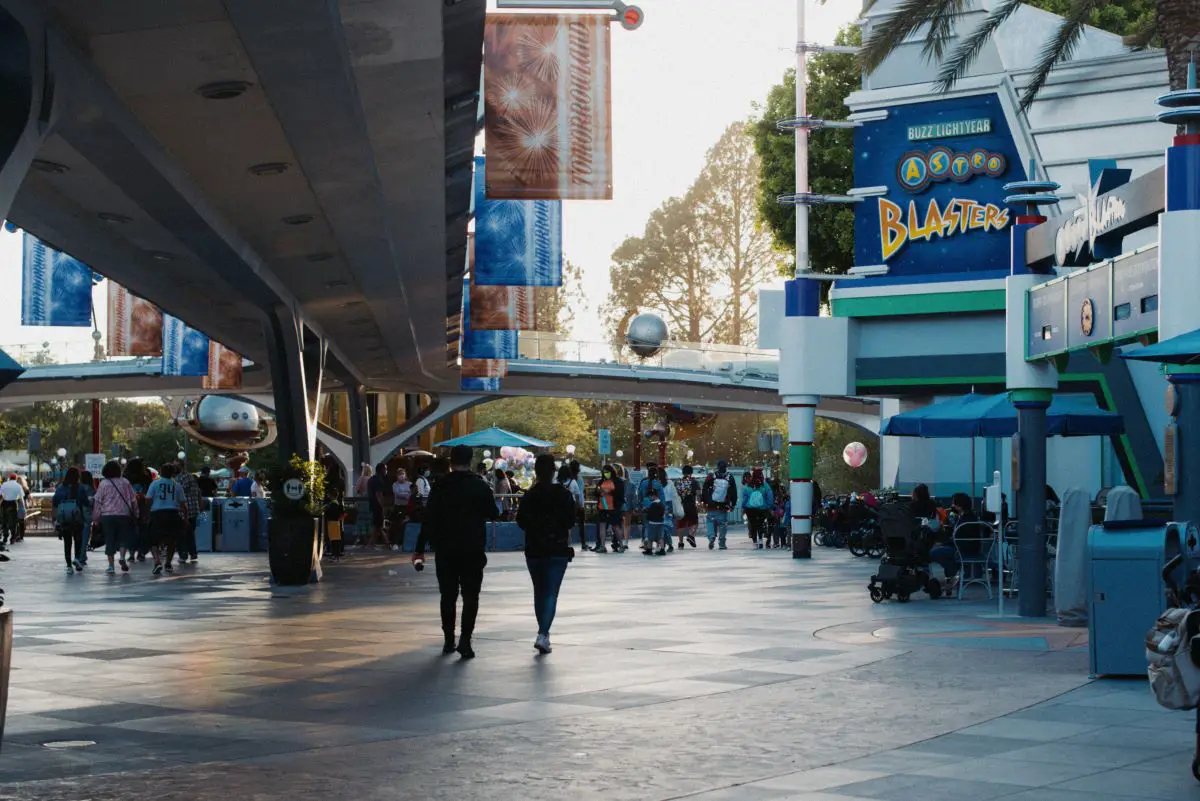
My best Buzz Lightyear Astro Blaster tips are simple: stop spraying randomly, aim for the higher-value Z targets that sit off to the side, keep your blaster steady instead of jerking it around, and use the spin control only when it helps you line up a clean shot.
After riding it multiple times in a row, I found that score jumps usually come from patience and target choice, not from firing faster. If you are trying to raise your score at Disneyland, this is one of those rides where a few small adjustments make a huge difference.
Buzz Lightyear Astro Blasters looks like a kid-friendly Tomorrowland ride, but it can get surprisingly competitive once everyone in the vehicle starts comparing scores. I’ve ridden it when the line moved quickly in the morning and again later when Tomorrowland felt more packed and noisy, and the biggest thing I’ve noticed is that most people waste points by shooting at whatever is directly in front of them.
This ride rewards a little discipline. You do not need perfect aim, but you do need to know where to look, when to hold your shot, and when spinning your vehicle helps versus when it ruins your angle.
Buzz Lightyear Astro Blaster tips that matter most
The fastest way to improve is to stop treating the ride like a frantic arcade game. The blaster can feel a little loose, and the vehicle rotation makes people panic, but this ride gets easier when you slow your brain down and start looking for repeatable shots.

These are the changes that helped me most.
Aim for targets that are harder to reach
The easy targets that everybody shoots at are not always the ones that move your score the most. I consistently do better when I ignore the obvious front-facing targets and look for Zs that sit higher up, off to the side, or slightly hidden. Those are often the ones fewer people are hitting, which means your shots actually register instead of getting lost in the chaos.
When I first started riding, I kept focusing on whatever glowed brightest. That felt natural, but it usually meant I was fighting for the same target everyone else was already blasting. Once I started hunting for side angles and less obvious Zs, my score improved much faster.
Hold the blaster steady
One of the easiest mistakes on this ride is waving the blaster around like a flashlight. I get much better results when I pick a target, settle the red dot, and fire in short bursts instead of wildly squeezing the trigger while searching.
There is a rhythm to it. Find the target first, then commit. If your hand is shaky, brace your arm against the ride vehicle and make smaller movements.
Spin the car with purpose
The spin control can help, but it can also wreck your whole run if you overdo it. I usually spin only when I need a better angle on a target cluster or when I know a strong target is sitting just off-center. Constant spinning makes it harder to track where your beam is landing.
A lot of people think more spinning equals more chances. In practice, I’ve found it usually means less control. Smooth, small adjustments tend to beat frantic spinning every time.
Start scoring early
Do not wait to “get warmed up.” I try to lock in from the first room because early points matter, and they also help you settle into the pace of the ride. The first few scenes are where I remind myself to stay calm, watch where the beam is landing, and avoid wasting shots.
That matters even more if you only plan to ride once during a busy day. If you are fitting this into a larger Disneyland plan, you may not want to loop back for a redo later.
Learn how the red dot behaves on the ride
This ride gets easier once you accept that the aiming can feel a little quirky. The beam is not always intuitive in the middle of the motion, and that is why I think first-time riders often leave with lower scores than they expected.
Instead of getting frustrated, I treat the first part of the ride as calibration.
Watch where your shots are actually landing
For me, the biggest breakthrough was paying attention to feedback instead of just firing non-stop. If the dot looks slightly off from where I thought it would be, I adjust immediately and keep that same angle for the next target.

Once you start noticing how your specific blaster feels, the ride becomes more repeatable. That is especially true if you ride twice in a row during a lighter crowd window, which is one reason I usually pair this with broader Disneyland rope drop tips when I want to get more done in Tomorrowland.
Test a target before you commit to it
If I am unsure whether I have the angle, I tap the trigger once or twice first. That quick check helps me see whether the beam is lined up before I waste a long burst on the wrong spot.
This sounds minor, but it saves a lot of dead shots over the course of the ride. On a short attraction like this, those little corrections add up.
Best targets and scenes to pay attention to
The ride moves quickly, so having a loose plan matters. I do not think you need to memorize every single set piece, but I do think it helps to know that some scenes are worth more of your focus than others.
What helps most is staying alert for moments when a target is available from an angle that other riders miss.
Look for side shots as your vehicle passes by
Some of my best scoring moments have come just after my car started moving past a target, not while it was centered in front of me. A lot of riders give up too soon. I keep shooting for another second or two if I still have the angle from the side.
That is one of the more underrated habits on this ride. The cleanest shot is not always the most obvious one.
Prioritize clean visibility over constant action
I skip targets that feel blocked, crowded, or awkward unless I know I have the line. It is better to get a solid hit on one target than spend five seconds chasing something I cannot actually land.
This is especially true when the ride vehicle is rotating and your view is changing fast. I would rather reset and line up the next shot than stubbornly stay on a bad one.
Ride again if you want a true high score
This is one of those attractions where a second ride almost always goes better for me than the first. By then, I know how the blaster is responding, which scenes I want to focus on, and where I lost points the first time.
If Astro Blasters is a priority, try it during a lower-stress part of the day rather than squeezing it in between bigger headliners from your list of all the rides at Disneyland. When Tomorrowland is packed, I notice more people rush through the queue and onto the ride without really thinking about strategy.
Best time to ride if you care about your score
Crowd level does not change the target values, but it absolutely changes how relaxed and focused I feel. My best rides usually happen when I am not already exhausted, overheated, or trying to make up lost time.

That is why I usually treat this as either a morning ride or a smart repeat ride later if the wait drops.
Morning tends to feel easier mentally
In the first part of the day, I am usually more patient and less distracted. Tomorrowland also tends to feel a little less chaotic then, which makes it easier to board the ride in a calm headspace. That sounds small, but Astro Blasters is a ride where concentration really does help.
If you are deciding when to prioritize it, I would compare it against the broader park rhythm in these best times to go to Disneyland and Disneyland attendance calendar guides.
A repeat ride can work well in the afternoon
Sometimes I like riding once in the morning, then again later after a snack break. The second ride often goes better because the pressure is gone and I already remember where I missed opportunities.
Tomorrowland can feel draining in the middle of a long day, so I usually do better after resetting with food or water. If you are building in breaks, it helps to know where to eat at Disneyland Park or even where to grab something simple like a Dole Whip at Disneyland.
Mistakes that keep scores low
Most low scores come from the same handful of habits. I see them over and over, especially with people who assume the ride is pure luck.

There is definitely some blaster inconsistency from ride to ride, but bad habits are usually the bigger problem.
Firing constantly with no target
This is probably the most common mistake. Pulling the trigger non-stop feels productive, but it usually means you are not really aiming. I get better results from short, deliberate bursts.
Spinning too much
Over-rotating the car makes it hard to build any rhythm. I only spin when it helps me line up a real opportunity. Otherwise, I let the ride carry me and focus on clean shots.
Chasing the same obvious target as everyone else
When a bright target is directly ahead, everybody goes for it. That makes it harder to tell whether your shots are landing and easier to waste time. I would rather look for the angle other people are ignoring.
Ignoring your seating position
Your angle changes depending on where you are sitting and how the vehicle is rotating in that moment. I always remind myself that not every target is worth forcing from every position. Sometimes the better move is to let one go and prepare for the next scene.
Is Astro Blasters worth prioritizing at Disneyland?
I think it is worth prioritizing if you enjoy interactive rides, a little competition, or attractions that are easy to re-ride without a huge physical commitment. It is also a nice change of pace from bigger attractions because the goal is not just to experience the ride. You are actively trying to improve.
That said, I would not build my whole day around it unless you really love arcade-style rides. I see it as one of those fun Tomorrowland wins you can use to add variety to a day that already includes headliners, snacks, and a few slower moments. If you are still mapping out the full day, a broader Disneyland planning guide can help you decide where it belongs.
For official attraction details, current ride info, and park updates, I also check the Disneyland Resort website.
My personal Astro Blasters strategy in one ride-through
When I board, I do not try to be a hero in the first five seconds. I use the opening part of the ride to settle my aim, see how the red dot is tracking, and get one or two clean hits. After that, I look for side targets, avoid wasting time on crowded obvious ones, and keep the car rotation minimal unless I really need an angle.
By the second half of the ride, I am usually doing best when I have stopped thinking about score in a frantic way. That is when I tend to shoot more cleanly and make better decisions. Astro Blasters rewards control more than panic, which is probably why I enjoy it more every time I ride it.


