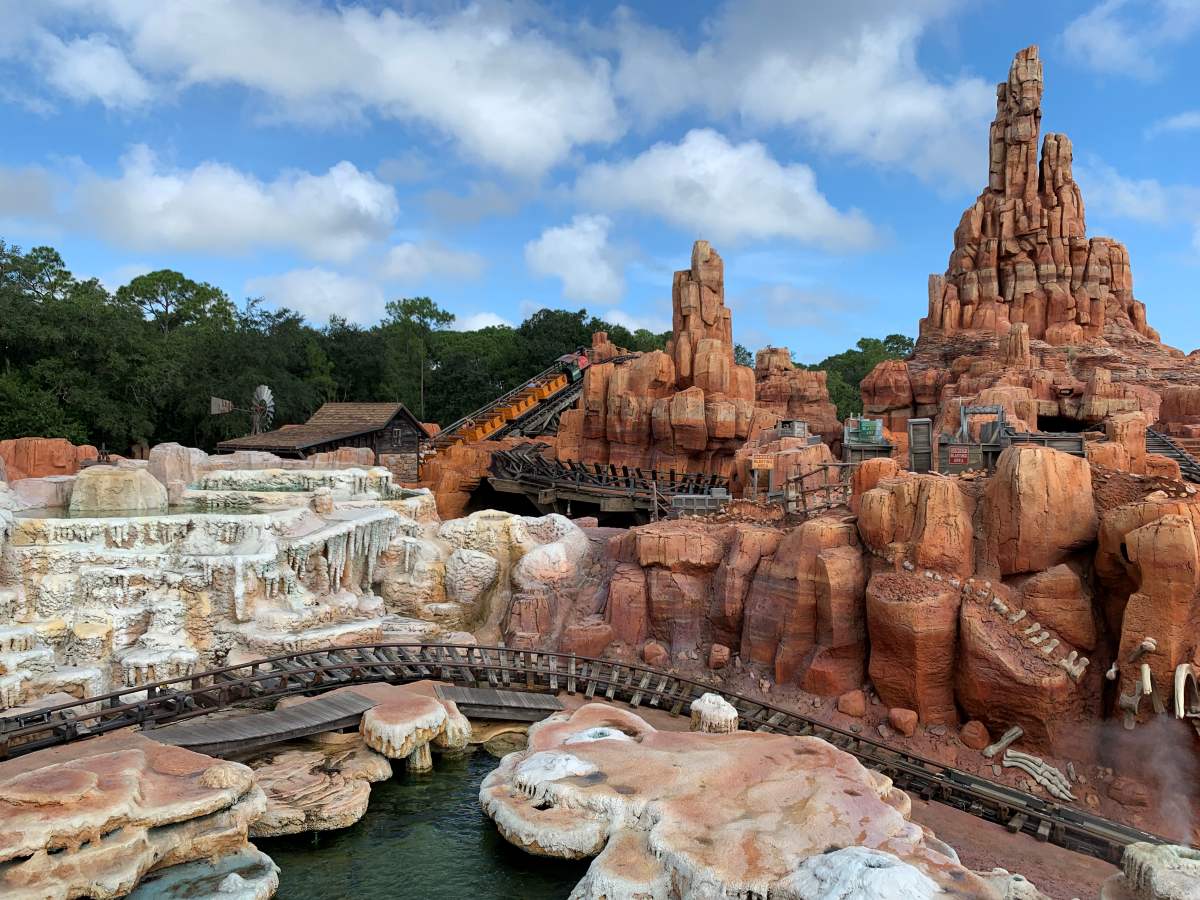
The Magic Kingdom rides with the longest wait times are usually TRON Lightcycle / Run, Seven Dwarfs Mine Train, Tiana’s Bayou Adventure, Peter Pan’s Flight, Space Mountain and Jungle Cruise. Big Thunder Mountain Railroad can also move into that group on busier days.
The exact order changes constantly. Weather, attraction downtime, Lightning Lane demand, special events and the overall crowd level can all push one ride above another. But these are the attractions I watch most closely when I’m trying to avoid spending a large part of my Magic Kingdom day standing in line.
Recent wait-time data backs that up. In late September 2026, TouringPlans reported TRON as the attraction with the highest average posted wait at Magic Kingdom, averaging 54 minutes one week and 53 minutes the next.
| Ride | Line Risk | How I Would Handle It |
|---|---|---|
| TRON Lightcycle / Run | Very high | Ride early or late, or consider Lightning Lane Single Pass |
| Seven Dwarfs Mine Train | Very high | Use Early Entry, late evening or Lightning Lane Single Pass |
| Tiana’s Bayou Adventure | High and variable | Watch the app closely and consider Multi Pass |
| Peter Pan’s Flight | High | Ride very early or use Multi Pass |
| Space Mountain | High | Early morning, late night or Multi Pass |
| Jungle Cruise | High | Avoid the afternoon peak and check evening waits |
| Big Thunder Mountain Railroad | Moderate to high | Watch waits later in the day or use Multi Pass |
I wouldn’t treat that table as a fixed ranking. Think of it as the group of attractions most likely to create a problem in your schedule if you simply show up in the middle of the day and join whatever standby line you see.
TRON Lightcycle / Run Can Have the Longest Line in Magic Kingdom
TRON is one of the first rides I would check when planning a Magic Kingdom day because its wait can remain substantial for long stretches of the day.
That doesn’t mean it will always have the longest line at the exact moment you visit. Seven Dwarfs, Tiana’s or another headliner can temporarily pass it. But recent 2026 data has repeatedly placed TRON at or near the top of Magic Kingdom’s wait-time rankings.
Disney currently offers TRON through Lightning Lane Single Pass rather than Multi Pass. If I don’t want to pay for Single Pass, I would watch the standby wait early in the day and again later in the evening instead of automatically joining a long afternoon queue.
If you’re deciding where TRON fits compared with the park’s other coasters, my Magic Kingdom roller coaster guide compares the major options.
Seven Dwarfs Mine Train Remains One of the Toughest Standby Lines

Seven Dwarfs Mine Train is another attraction where I don’t like gambling with the middle of the day. Its combination of family appeal and coaster thrills keeps demand high across a much wider audience than some of Magic Kingdom’s more intense rides.
If you’re eligible for Early Theme Park Entry, this is one of the rides worth considering during that window. Otherwise, I would compare the wait against TRON and Peter Pan before committing to Fantasyland first thing.
Seven Dwarfs Mine Train is also currently a Lightning Lane Single Pass attraction. That makes the decision fairly straightforward: either devote one of your best standby windows to it or decide whether paying separately is worth preserving that time for something else.
Tiana’s Bayou Adventure Can Jump Toward the Top
Tiana’s Bayou Adventure deserves a place on this list now. Its wait can be more erratic than something like Peter Pan because weather and temporary downtime can affect how the line develops.
That variability is exactly why I would watch the My Disney Experience app instead of deciding in advance that I am willing to wait a certain amount of time. If the attraction has been down and comes back online, the surrounding crowd can change quickly.
Tiana’s is currently one of the attractions available through Lightning Lane Multi Pass at Magic Kingdom. If it is one of your priorities, compare it carefully with the other high-demand Multi Pass choices rather than using a selection on something that normally develops a much shorter standby wait.
Peter Pan’s Flight Builds a Long Line Surprisingly Fast
Peter Pan’s Flight is one of the easiest waits to underestimate. It isn’t a roller coaster or a new attraction, but its popularity with families combined with relatively limited hourly capacity allows the standby queue to build quickly.
If Peter Pan is important to me, I want to ride it near the beginning of the day rather than discovering at lunchtime that a short Fantasyland dark ride has one of the longest lines in the park.
The other option is Lightning Lane Multi Pass. Peter Pan is currently in the higher-priority group of Magic Kingdom Multi Pass selections, along with attractions such as Space Mountain, Jungle Cruise, Tiana’s Bayou Adventure and Big Thunder Mountain Railroad.
Families planning heavily around Fantasyland may also want my Fantasyland rides guide so you can see which nearby attractions are easier to fit around Peter Pan.
Space Mountain Is Another Ride I Don’t Like Chasing at Midday
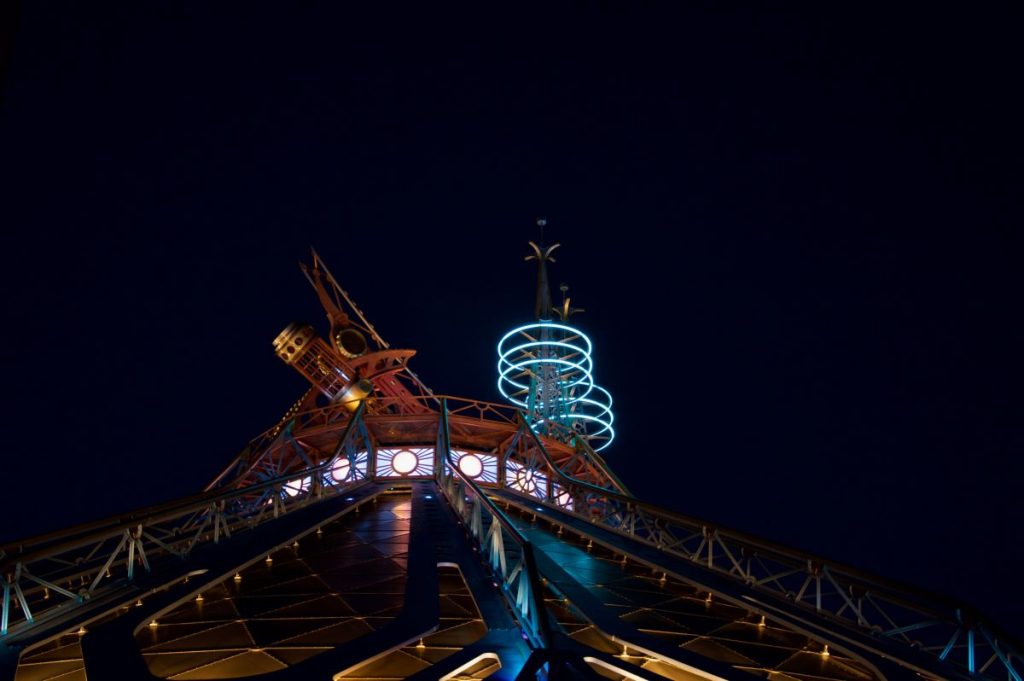
Space Mountain has enough demand to produce a frustrating standby wait once Tomorrowland fills up. I wouldn’t necessarily make it my first attraction every morning, but I also wouldn’t leave it completely unplanned if riding it matters to me.
The first part of the morning and the later part of the evening are the standby windows I would watch most closely. If I’m using Lightning Lane Multi Pass, Space Mountain is also one of the attractions I would compare against Peter Pan, Tiana’s, Jungle Cruise and Big Thunder when choosing my higher-priority reservation.
Jungle Cruise Is Often Worse in the Afternoon
Jungle Cruise is different from the coaster headliners because its long line can sneak up on people. It doesn’t look like the type of attraction that should consume a huge part of the day, but standby waits can climb considerably once Adventureland gets busy.
I particularly dislike using the middle of the afternoon here. If the posted wait is already high, I would rather keep moving and check again later. Evening also changes the atmosphere of the ride, so waiting until later doesn’t feel like much of a compromise to me.
Jungle Cruise is currently available through Lightning Lane Multi Pass, giving you another option if it is an important part of your day.
Big Thunder Mountain Railroad Can Still Develop a Serious Wait

Big Thunder Mountain Railroad is not necessarily going to outrank TRON or Seven Dwarfs every day, but I would still keep it in the group of attractions that can become expensive in terms of park time.
The attraction recently returned from a major refurbishment, which is another reason I would not rely too heavily on old wait-time assumptions. Demand, operating patterns and guest behavior can change when a familiar attraction returns with new additions.
Big Thunder is also part of Lightning Lane Multi Pass. If the standby line gets longer than I’m willing to accept, I would move on instead of letting one attraction derail the rest of my Frontierland plans.
How Long Are the Lines at Magic Kingdom?
There isn’t one useful number for the average Magic Kingdom line because the park contains everything from high-demand roller coasters to high-capacity attractions that may have minimal waits. Even the same ride can look completely different at 9 a.m., 2 p.m. and 10 p.m.
As a recent example, TouringPlans calculated Magic Kingdom’s park-wide average posted wait at about 19 minutes during September 15 through 28, 2026. That did not mean TRON had a 19-minute wait. TRON averaged more than 50 minutes during those same weeks. A park-wide average can therefore hide the handful of rides that actually create planning problems.
If you’re trying to judge waits throughout your day rather than identify the biggest offenders, see my separate guide to Magic Kingdom ride times.
Posted Wait Times Aren’t Always Your Actual Wait
Another reason I don’t obsess over a single number is that the posted wait and the amount of time you actually spend in line can differ.
TouringPlans compared submitted actual waits with Disney’s posted waits during two weeks in September 2026 and found that actual waits across Walt Disney World averaged about 74% of the posted number. That doesn’t mean you should automatically subtract 26% from every Magic Kingdom wait, but it does show why a posted 60-minute wait is not a guarantee that you will physically stand in line for exactly one hour.
I still use the posted number for decision-making because that is the information available while touring. I just treat it as a planning signal rather than a stopwatch.
The Best Ways to Avoid Magic Kingdom’s Longest Lines
The easiest mistake is trying to beat every long line with the same strategy. I don’t. The best approach depends on the attraction.
For rides available during Early Entry, that first part of the morning can be extremely valuable. For attractions outside that opening strategy, regular rope drop may make more sense. Late evening can create another opportunity when families begin leaving and crowds redistribute around nighttime entertainment.
Lightning Lane also changes the calculation. If I already have a reservation for one of the rides that normally posts a long wait, I don’t waste my best morning standby window riding the same attraction. I use that time somewhere else.
My guide to the best times to ride Magic Kingdom attractions goes deeper into the morning, midday and evening strategy. If you’re buying Lightning Lane, use the best Magic Kingdom Lightning Lane picks to decide which reservations can save the most useful park time.
Which Magic Kingdom Rides Should You Prioritize?
I wouldn’t automatically prioritize a ride just because it has the longest line. The better question is whether that ride matters to you enough to justify using one of your best touring windows on it.
If TRON is your must-do attraction, build around TRON. If you’re traveling with younger kids who care much more about Peter Pan and Seven Dwarfs, those lines deserve your attention instead. A 60-minute wait for something you don’t particularly care about is never a good use of time just because it happens to be popular.
If you’re still deciding what deserves a place in your day, start with my best Magic Kingdom rides guide or browse the complete list of Magic Kingdom rides. Once you know what you actually want to ride, the longest lines become much easier to plan around.